
Hire a video editor or do it yourself?
Editing it yourself feels free, but it costs you evenings and weekends. Whether a studio pays off is decided less by price than by the time the editing actually eats.
Growth and marketing · Updated 18 September 2026 · 7 min read
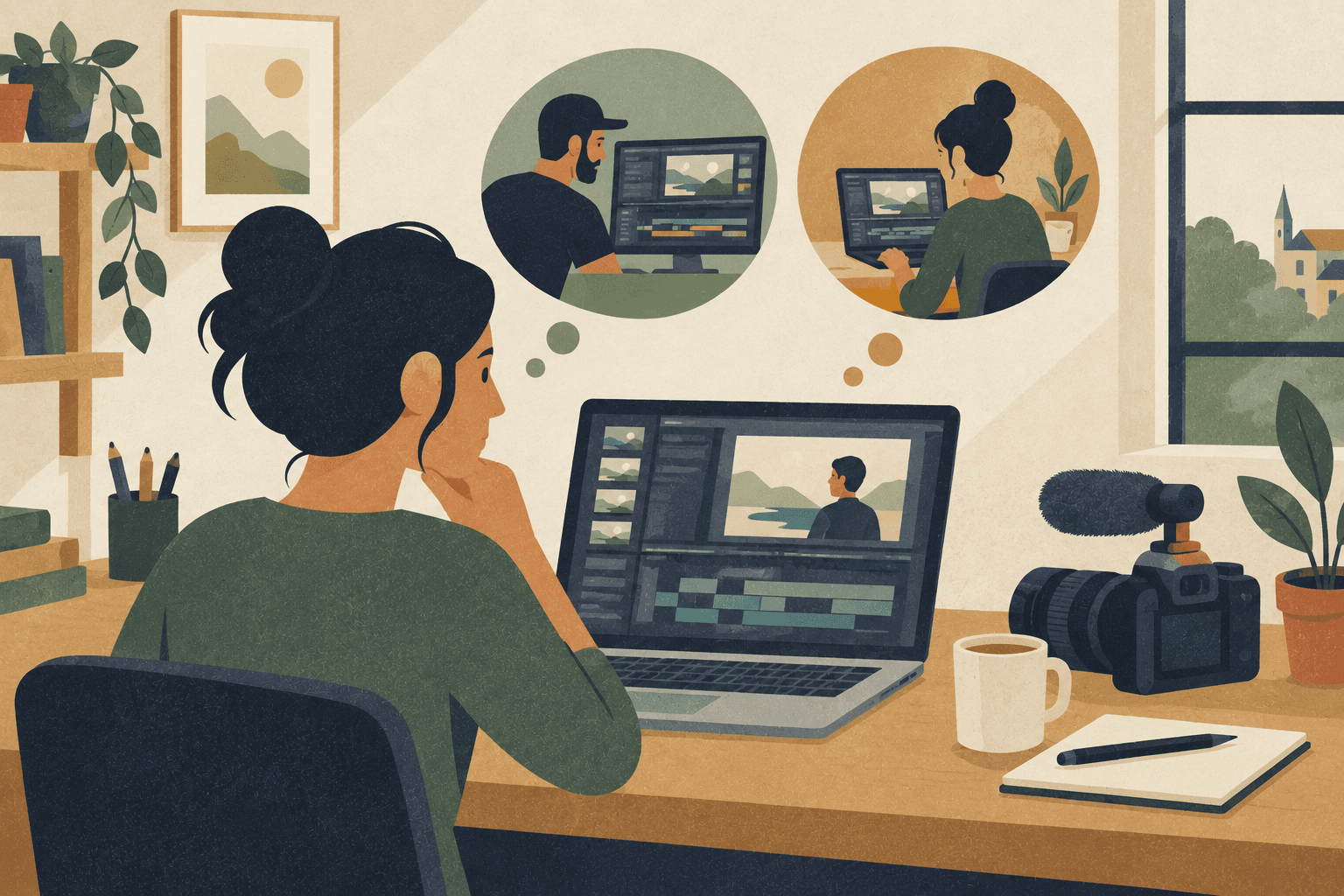
Edit in-house if someone on your team can already cut video, actually has time for it, and the format list stays simple. A studio becomes worthwhile once editing, variants, and approvals start slowing your publishing rhythm, or the look drifts from video to video.
Before you decide, track the real hours: review, editing, revisions, and export, and what that time would otherwise be worth. That comparison is the only fair way to judge an external offer.
What changes day to day
Time
Edit in-house
Stays with you or your team, often evenings or weekends
Hire a studio
Moves into a fixed process with a set approval date
Control
Edit in-house
You decide directly at the desktop
Hire a studio
You decide in the brief and at approval
Consistency
Edit in-house
Depends on who has time and how well the template holds up
Hire a studio
Runs from a documented brand style, whoever is cutting
Capacity
Edit in-house
Competes with client work, admin, and everything else in the business
Hire a studio
Can be planned for several videos ahead of time
What a clean production process looks like
Source footage is reviewed and selected, cut to the brand's identity, and presented for approval before the agreed formats are delivered.
When in-house editing makes sense
In-house editing works well at low volume, with a simple look, and someone on the team who enjoys the craft and has time for it consistently. It is also the right call when a reaction needs to go live the same day and does not need heavy post-production, for example a quick response to a customer comment or something filmed on site.
Can your team reliably fit one or two videos a week without other work slipping? Then stay in-house for now.
When outside support makes sense
A studio becomes worth it once editing, variants, and approvals start slowing your publishing rhythm. The same is true when the look shifts from video to video because different people are cutting. A good studio takes on your brand rules, runs a fixed process, and makes the handover simple: send the material, give feedback once, get the finished video back. Take a garage business that wants a weekly customer video but is already stretched between the workshop and the service desk: the editing keeps slipping until it is not worth publishing at all.
Once videos are piling up because nobody has time to cut them, that is the moment to talk to a studio.
What to define before handover
- Which formats and how many variants each video actually needs
- Which brand rules are binding, including colors, type, and tone
- Who on your team collects feedback and gives final approval
- Agreed turnaround time and number of revision rounds
- Where source footage and final files live, and who has access
FAQ
No, not if brand rules, approvals, and ownership are clear beforehand. You decide at the brief and at approval, the studio handles the production in between.
Source footage, the goal of the video, the formats you need, your brand rules, and a few references you like. With us that runs through a short call, a brief per video, editing to your brand, and approval in the cloud before you publish.
It depends on the amount of footage, formats, variants, turnaround, and revision rounds. A serious offer makes those factors visible before the work starts, instead of quoting a flat price.
Mygenzy works with small and mid-sized businesses on processes, marketing, and AI. This article was created with the help of AI and reviewed by people.
Clarify your editing needs
Send us your material, formats, and rhythm. We will tell you honestly whether a studio makes sense for you, or whether editing in-house is still the better call.